
Archery Rehabilitation & Shoulder Injury: Can Archery Help Recovery?
- May 13
- 4 min read

Archery Rehabilitation & Shoulder Recovery
Shoulder injuries can be frustrating, painful, and incredibly limiting — especially when everyday activities like lifting shopping bags, reaching overhead, or even sleeping become uncomfortable. Yet for some individuals, archery rehabilitation is emerging as a surprisingly effective way to rebuild strength, improve posture, and restore confidence in movement.
When approached correctly, archery is not simply a sport. It can become a structured form of controlled rehabilitation.

Archery Rehabilitation & Shoulder Recovery
Why Shoulder Injuries Are So Common
The shoulder is one of the most mobile joints in the body. That mobility comes at a cost: stability.
Common shoulder issues include:
Rotator cuff injuries
Frozen shoulder
Shoulder impingement
Labral irritation
Postural dysfunction
Weak scapular stabilisers
Repetitive strain injuries
Modern lifestyles also contribute heavily. Hours spent sitting, driving, working at desks, or using phones can lead to rounded shoulders, poor thoracic posture, and weakened upper-back musculature.
Over time, the shoulder loses efficient movement patterns.
What Makes Archery Different?
Unlike many gym exercises, archery requires:
Controlled movement
Bilateral coordination
Postural awareness
Scapular stability
Slow eccentric muscle control
Focused breathing
A properly coached archery movement trains the body to stabilise rather than compensate.
This is one reason some physiotherapists and rehabilitation specialists are increasingly interested in precision sports and movement-based rehabilitation strategies.
The draw cycle in archery encourages activation of:
Rhomboids
Lower trapezius
Posterior deltoids
Rotator cuff stabilisers
Core musculature
These are often the exact muscle groups weakened in modern postural dysfunction.

The Science Behind Controlled Rehabilitation
Research into therapeutic movement consistently shows that gradual loading and controlled motor patterns can support recovery from many musculoskeletal conditions.
Archery naturally promotes:
Neuromuscular control
Proprioception (body awareness)
Joint positioning
Functional strength
Concentration and relaxation
The key word is controlled.
Heavy resistance training too early in rehabilitation can overload injured tissue. Archery, however, can often be adapted progressively:
Resistance bands
Lightweight bows
Blank boss shooting
Short-duration sessions
Modified draw lengths
This allows individuals to rebuild movement confidence safely.
The Hidden Benefit of “Coming Down”
One of the most overlooked skills in archery rehabilitation is learning when not to shoot.
In archery, “coming down” means safely lowering the bow without releasing the arrow.
Many beginners assume every draw must end with a shot. In reality, experienced archers regularly come down when:
Alignment feels wrong
Shoulder tension increases
Pain appears
Fatigue affects posture
Expansion collapses
Mental focus is lost
For rehabilitation, this is hugely important.
Coming down teaches:
Body awareness
Injury prevention
Movement honesty
Control under tension
Safe load management
Instead of forcing a release through discomfort, the archer learns to recognise when the body is no longer in an optimal position.
This protects the shoulder joint from compensatory movement patterns that may aggravate injury.

When Should You Come Down?
In rehabilitation-focused archery, it is usually safer to come down if:
You feel sharp or unstable pain
The shoulder elevates excessively
The bow arm begins shaking heavily
Scapular positioning collapses
You lose anchor consistency
Breathing becomes strained
You hold longer than planned
Fatigue changes technique
There is no failure in coming down.
In fact, many coaches consider it a sign of discipline and body awareness.
For recovering archers, coming down early is often smarter than releasing badly.
Benefits of Archery During Rehabilitation
When properly supervised, archery rehabilitation may help improve:
Shoulder Stability
Controlled drawing strengthens supporting musculature around the shoulder complex.
Posture
Archery promotes thoracic extension and scapular positioning, helping counter rounded desk posture.
Coordination
The sport develops precise movement sequencing and bilateral control.
Mobility & Functional Strength
Low-load repetition can improve movement quality without excessive joint stress.
Confidence
Relearning movement safely can help reduce fear associated with previous injury.
Mental Focus & Stress Reduction
The structured shooting process encourages concentration and relaxation.
Long-Term Joint Awareness
Archers often become highly aware of posture, tension, breathing, and muscular imbalance.
Mental Health Benefits During Rehabilitation
Recovery is not purely physical.
Long-term injuries can affect:
Confidence
Identity
Stress levels
Anxiety
Motivation
Archery introduces a mindful element to rehabilitation.
The repetitive rhythm of:
Stance
Breathing
Draw
Anchor
Expansion
Release
creates a calming focus that many archers describe as meditative.
This can help reduce stress-related muscle tension that often contributes to chronic pain cycles.
When Archery Can Help Rehabilitation
Archery may support recovery in individuals with:
Mild-to-moderate shoulder instability
Postural weakness
Recovery after physiotherapy clearance
Sedentary-related dysfunction
Reduced scapular control
Confidence rebuilding after injury
However, it is not appropriate for every injury stage.
Acute tears, severe inflammation, fractures, or post-surgical recovery require medical oversight.
Always seek professional medical or physiotherapy guidance before beginning rehabilitation exercise.
Coaching Matters More Than Equipment
One of the biggest mistakes people make is assuming they need a powerful bow.
In rehabilitation-focused archery:
Technique matters more than poundage
Stability matters more than distance
Quality matters more than quantity
Poor form can reinforce dysfunctional movement patterns.
A qualified coach who understands biomechanics, posture, and gradual progression is essential.
Which is why I wanted to start my journey into Archery Coaching

Archery for Older Adults & Joint-Sensitive Shooters
Archery is also gaining popularity among:
Older adults
Individuals recovering from illness
People managing chronic pain conditions
Joint-sensitive participants
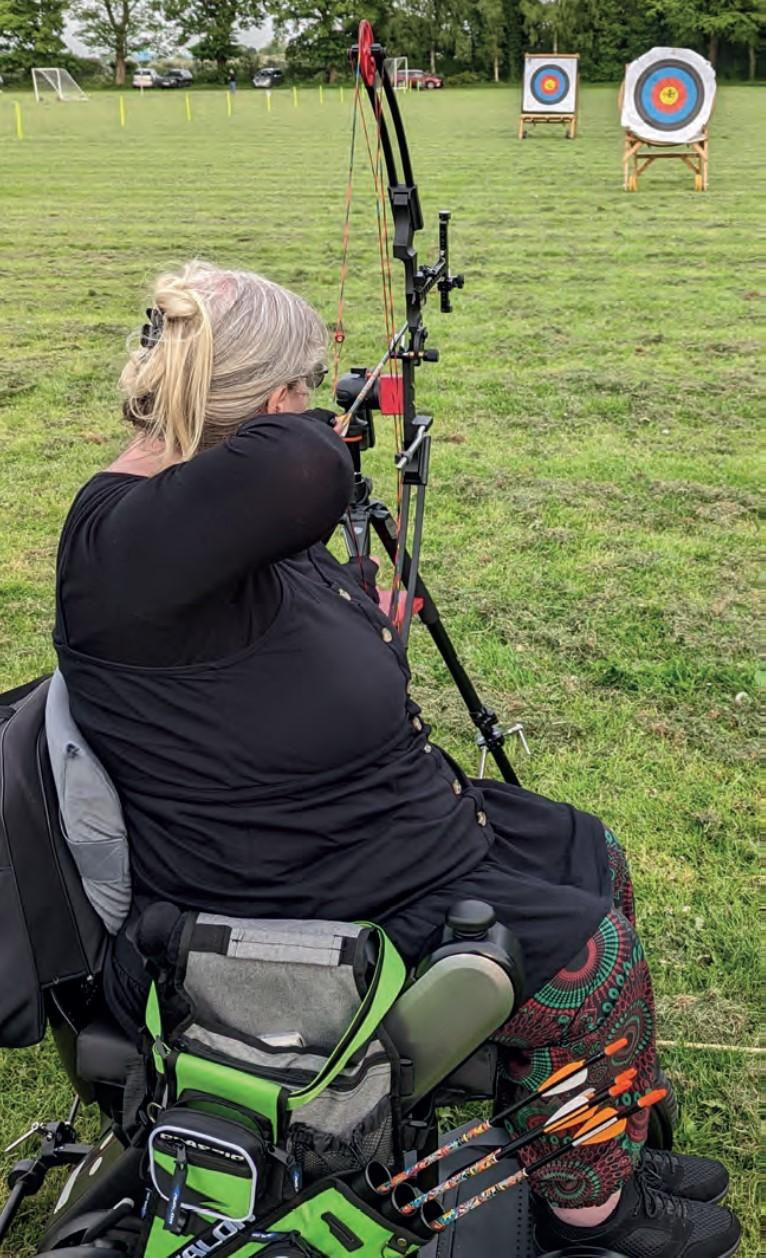
Because sessions can be adapted to individual capacity, archery offers a rare balance between physical activity and low-impact control.
This is one reason I wrote Golden Arrows: A Gentle Guide to Archery for Seniors, Rehab & Joint-Sensitive Shooters — a practical guide focused on accessible, inclusive archery.
You can learn more about the book here:
Practical Tips for Starting Archery Rehabilitation
1. Start Light
Use resistance bands or very low draw weights initially.
2. Prioritise Posture
Thoracic positioning and scapular control are critical.
3. Short Sessions Work Best
Fatigue often leads to compensatory movement.
4. Warm Up Properly
Focus on mobility, blood flow, and activation.
5. Learn to Come Down Safely
Stopping a shot is often more beneficial than forcing one.
6. Never Push Through Sharp Pain
Discomfort and muscular fatigue are different from injury pain.
Final Thoughts
Archery rehabilitation is not about becoming an Olympic archer overnight.
It is about rebuilding:
movement,
control,
confidence,
and connection with the body.
Sometimes the smartest shot is the one you choose not to release.
When combined with professional guidance, gradual progression, and correct coaching, archery can become a powerful rehabilitation tool for both physical and mental recovery.
For many people, the journey back to strength begins not with force — but with control.
Comments