
Adaptogens Explained: What the Research Says About Stress Support
- May 13
- 3 min read
Why This Happens
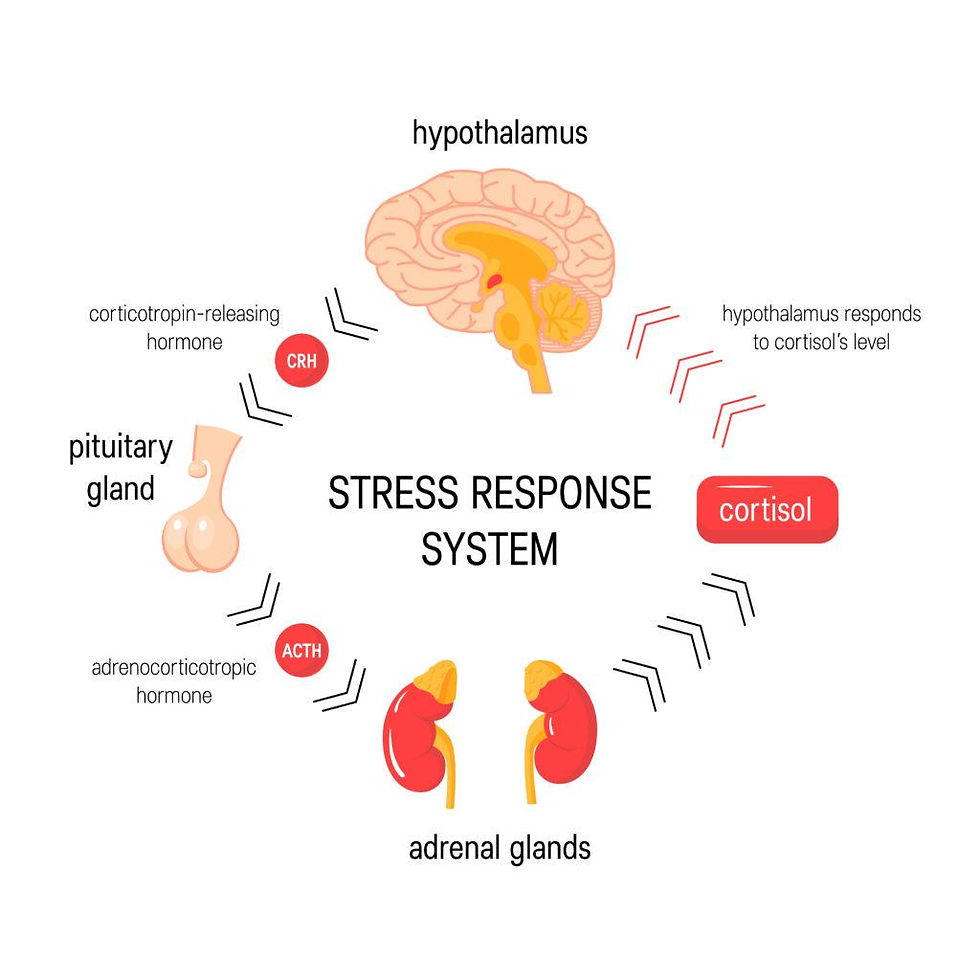
Stress is often described as something we simply need to “manage,” but from a physiological perspective, it is a whole-body response system.
At the centre of this is the HPA axis (hypothalamic–pituitary–adrenal axis), which regulates cortisol — your primary stress hormone.
When stress is short-term, this system works efficiently.
However, when stress becomes chronic:
Cortisol patterns become disrupted
Recovery between stressors is reduced
The body remains in a prolonged “alert” state
This can lead to:
Fatigue
Brain fog
Sleep disruption
Reduced resilience to stress
👉 This is where the concept of adaptogens becomes relevant.
Adaptogens are a group of plant compounds proposed to help the body adapt to stress rather than block it.
What Science Says
Adaptogens are defined as substances that:
Help the body resist stressors (physical, chemical, biological)
Support normal physiological function
Promote balance (homeostasis) without overstimulation
🔬 Evidence Overview
Research into adaptogens is growing, particularly around:
Stress perception
Cortisol regulation
Fatigue and cognitive performance
However, results vary depending on:
The specific herb used
Dosage and formulation
Population studied
👉 This is important:
Adaptogens are not a single category with uniform effects.
🌿 Common Adaptogens Studied
Ashwagandha (Withania somnifera)
Research suggests:
Reduction in perceived stress
Lower cortisol levels in some studies
Improvements in sleep quality
👉 Typically studied in controlled human trials using
standardised extracts
Rhodiola rosea
Associated with:
Reduced fatigue
Improved mental performance under stress
Faster recovery from stress-related exhaustion
Holy Basil (Ocimum sanctum)
Linked to:
Stress response modulation
Potential improvements in mood and resilience
Lion’s Mane (Hericium erinaceus)
Primarily studied for:
Cognitive function
Nerve growth support
Brain health rather than direct cortisol reduction

⚠️ Important Considerations
Despite growing interest:
Not all products use clinically relevant doses
Quality and standardisation vary significantly
Effects are often modest rather than dramatic
👉 This reinforces a key point:
Adaptogens support the stress response — they do not override it.
Practical Support Steps
✔ 1. Focus on Foundations First
Adaptogens are not a replacement for:
Sleep
Nutrition
Hydration
Stress management
👉 These remain the primary drivers of health.
✔ 2. Consider Individual Response
Effects vary depending on:
Hormonal status
Stress levels
Overall health
✔ 3. Look for Evidence-Based Formulations
Standardised extracts
Clinically studied doses
Transparent ingredient sourcing
✔ 4. Support the Whole System
Adaptogens work best alongside:
Balanced nutrition
Hydration
Stable routines
👉 You may also find this helpful:Why does hydration matter more during menopause?
✔ 5. Be Consistent
Most research shows benefits occur with:
Daily use
Over several weeks
—not immediate effects.
Why This Matters
Adaptogens are often marketed as quick solutions for stress.
But the science suggests something more nuanced:
👉 They may help support how the body responds to stress —but they are one part of a broader system.
Understanding this prevents:
Over-reliance on supplements
Unrealistic expectations
Misinterpretation of results
How I Support This
This is where many women feel unsure — there is a lot of information, but not always clear guidance.
Support focuses on:
Understanding what your body actually needs
Building simple, sustainable routines
Supporting stress, energy, and hormones together
For day-to-day support, some women find it helpful to use simple, consistent approaches that support hydration, nutrients, and overall balance.
💗 You can explore gentle daily support options HERE
💬 If you’re unsure where to start, you don’t have to figure it out alone.
👉 Book a free 10-minute support HERE
FAQs
Do adaptogens reduce cortisol?
Some studies suggest certain adaptogens may influence cortisol levels, but results vary and effects are typically moderate.
How long do adaptogens take to work?
Most research suggests several weeks of consistent use are needed.
Are adaptogens safe?
Generally well tolerated, but individual response varies and they should be used appropriately.
The Takeaway
👉 Adaptogens are not a quick fix.
They are tools that may support the body’s ability to respond to stress —when used alongside strong foundations such as sleep, nutrition, and hydration.


Comments